


Recycling of fiber composites – the next major breakthrough?
Right now, technological development in the recycling of fiber composites is advancing rapidly. Several companies have emerged on both the national and international startup scene aiming to create circularity in one of the industry’s most complex material streams. One of them is the Swedish company GFRP Sweden, which is now setting its sights on its first establishment in Piteå.
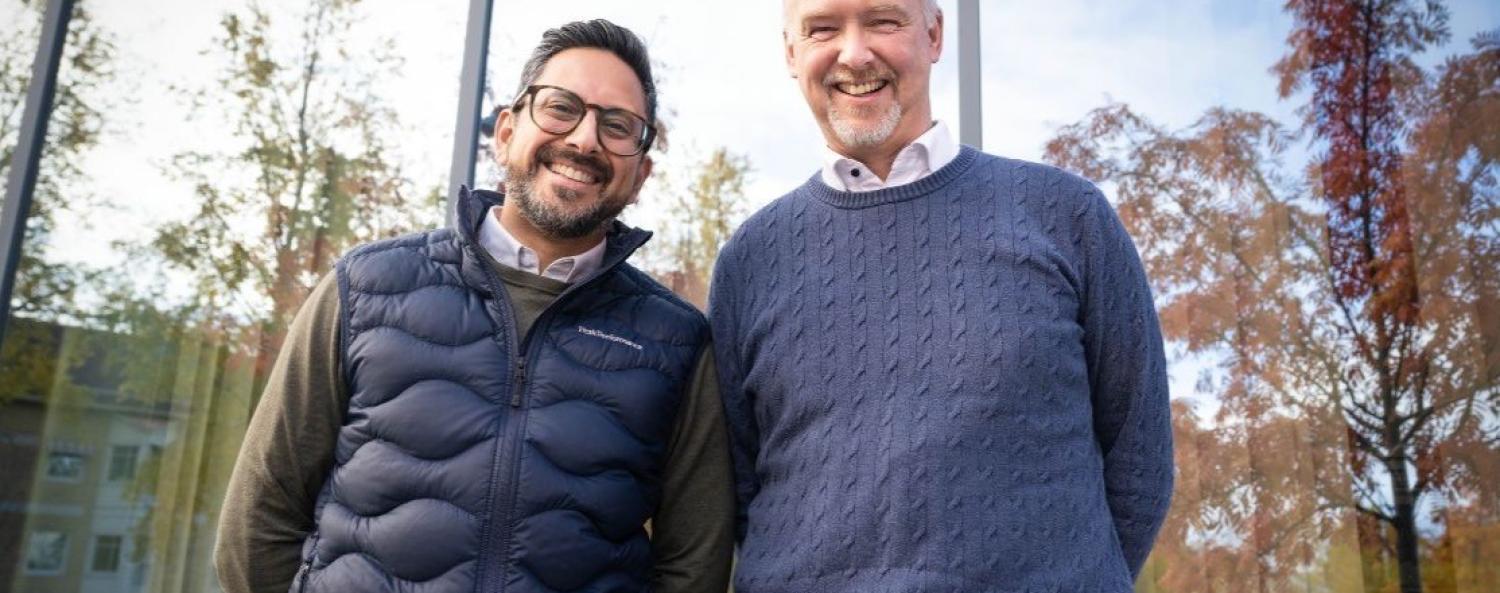
Right now, technological development in the recycling of fiber composites is advancing rapidly. Several companies have emerged on both the national and international startup scene aiming to create circularity in one of the industry’s most complex material streams. One of them is the Swedish company GFRP Sweden, which is now setting its sights on its first establishment in Piteå.
“We saw a problem in that a great material came to an abrupt end. It’s lightweight, strong, and durable—but when its lifecycle is over, the only options are incineration or landfill. That didn’t make sense,” says Fredrik Leek, Partner at GFRP Sweden.
From frustration to business idea
GFRP is driven by five individuals with backgrounds in technology, entrepreneurship, and wind power. It all started with a simple email: “Do you know anyone who can handle decommissioned wind turbine blades?” That question set things in motion, and the business idea took shape: to develop a method for recycling and refining glass fiber at scale.
After exploration and dialogue with, among others, RISE in Piteå, the founders identified pyrolysis as the most promising method. The technology heats the material in the absence of oxygen, separating glass fiber from thermoset plastics and resin. The output consists of three main products: glass fiber, pyrolysis oil, and gas.
“Depending on the source material, the recycled glass fiber reaches 60–95 percent of the strength of virgin material—sufficient for many applications,” says Martin Ärlestig, Partner at GFRP Sweden.
Strong demand in wind power and industry
When fiber composite applications such as wind turbine blades reach the end of their lifespan, the default solution has long been landfill or incineration. When GFRP analyzed the market, three major waste streams emerged: wind turbine blades, industrial composites, and leisure boats. Today, the company focuses on the first two, where the potential to build industrial recycling chains is greatest.
The Swedish Energy Agency estimates up to 8,000 tons of waste per year by 2030 from decommissioned wind turbine blades alone. GFRP Sweden early on signed a letter of intent with RWE Renewables Sweden to explore sustainable ways to manage these blades.
For industry, this opens up the possibility not only to recycle but also to reuse their own materials—a key factor in meeting climate goals and growing sustainability demands from customers.
“It’s about taking responsibility for the entire lifecycle. We see the shift being driven by industry, research, academia, and not least younger generations who want to see real results,” says Martin Ärlestig.
First establishment in Piteå
GFRP Sweden is currently in dialogue with investors, industry partners, and technical collaborators, and is considering Piteå for its first establishment. The company connected with Piteå through RISE and the Swedish Composite Innovation Cluster.
“In Piteå, there is an incredible breadth of expertise in fiber composites, with strong companies, research, skills, and proximity to Europe’s largest wind farm. When we need to discuss complex issues, we can quickly connect with the right person,” says Fredrik Leek.
In the long term, the company aims to build several recycling nodes across the country, located close to major wind farms.
“We see this as the beginning of something bigger. If we succeed in creating circularity for fiber composites, we can transform the industry. The material can be recycled almost indefinitely—it’s just a matter of taking the first step,” says Martin Ärlestig.
A breakthrough in the making
Looking globally, development is moving fast. Several European players such as Composite Recycling (Switzerland), Gjenkraft (Norway), and in Sweden Fiberloop and Afterwind are working on similar or complementary solutions. GFRP sees them as industry peers rather than competitors.
“We need multiple players paving the way. The more of us there are, the clearer it becomes that this is the next major step for the industry,” says Fredrik Leek.