


Gå direkt till innehåll Gå direkt till menyn

22 April 2026, News

PaperShell’s “super paper” paves the way for the next generation of sustainable material solutions

PaperShell is often highlighted as one of Sweden’s most exciting companies. The company has developed a bio-based material that can replace, among other things, fossil-based plastics and composite materials, as well as aluminum—thereby enabling a shift in material use across several industries. The material was developed in collaboration with RISE Research Institutes of Sweden in Piteå. Today, PaperShell has two factories, around thirty employees, and production that runs around the clock.
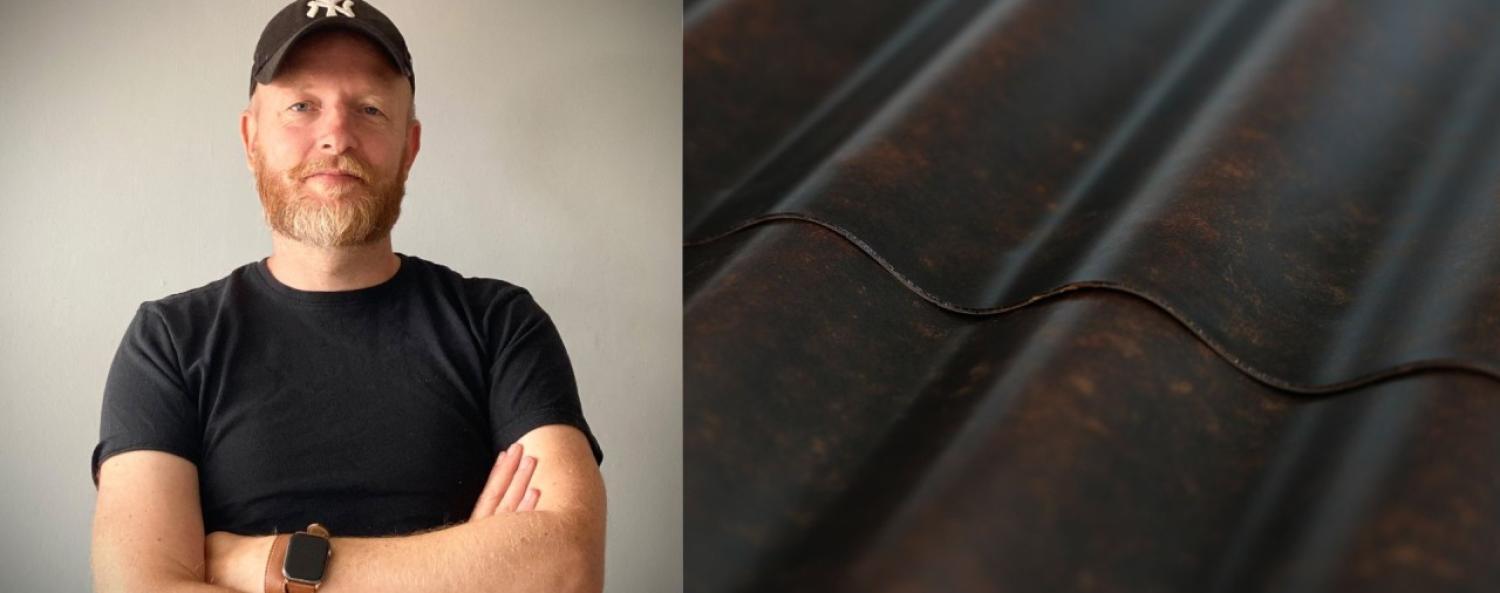
PaperShell’s “super paper” paves the way for next-generation sustainable materials

PaperShell is often highlighted as one of Sweden’s most exciting companies. The company has developed a fully bio-based material that can replace fossil-based plastics and composite materials, as well as aluminum—enabling a shift in material use across multiple industries. The material was developed in collaboration with RISE in Piteå. Today, PaperShell has two factories, around thirty employees, and production that runs almost around the clock.

“We are an example of a promising innovation that hasn’t been stuck at the research stage. In Europe, we are very strong in innovation, but significantly weaker when it comes to industrializing, capitalizing, and resourcing the full journey from idea to finished product. Everyone wants to talk about innovation, but few take the step into industry,” says Anders Breitholtz, CEO and founder of PaperShell.

The material—a pressed recycled paper, described as both “super paper” and “the green supermaterial”—was developed together with RISE’s testbed for sustainable composite manufacturing in Piteå. It is a clear example of how an innovation can make the full journey from idea and lab environment to industrialization in a relatively short time.

“As a startup, we had a strong need for both expertise and equipment. Gaining access to RISE’s combined knowledge in fibers, tooling, and process development—as well as advanced equipment we could never have afforded ourselves—was a crucial piece of the puzzle,” says Anders Breitholtz.

International recognition and ready to scale production
Since then, the journey can hardly be described as anything other than a success story. PaperShell has been featured three times in Forbes, appeared in The New York Times, and products based on the company’s material have received several prestigious awards. Today, the products are available on the international market, and the company has been selected to receive more than €83 million in support from the EU Innovation Fund to scale up production at its factory in Tibro.

The company collaborates with leading players in the automotive industry, construction sector, furniture industry, and public sector—something that has been a key success factor both commercially and technically. At the same time, a consistent circular approach runs throughout the entire business.

“There is no contradiction between environmental sustainability and economic viability. If you believe that, you’ve missed the point of sustainability. We need to use forest-based raw materials more intelligently, create longer-lasting products, and build industry close to the raw materials. That way, we can both reduce climate impact and strengthen societal resilience.”

PaperShell aims to inspire others to go all the way
Looking ahead, PaperShell sees the greatest potential in the construction sector, where material choices have a major climate impact, but also in electronics and other areas where current solutions contribute to growing waste problems. The ambition is not to stand alone—quite the opposite.

“Imagine if PaperShell could help inspire others. To show that industrial manufacturing doesn’t have to be a downward spiral. If we look at how nature works, it is extremely resource-efficient—a circular bioeconomy to an almost absurd degree.”

CEO Anders Breitholtz also hopes that the company’s journey can contribute to a more hopeful vision of the future.

“It’s important that the next generation grows up with a different narrative than today’s dystopian one—a story that shows it is possible to build a future in harmony with nature.”