


7 insights from JEC World – the world’s largest meeting place for the fiber composites industry
SWE-CIC’s David Engberg, RISE Research Institutes of Sweden, and Sammy Pergament, Piteå Science Park, attended JEC World in marsch 2026. The exhibition brings together thousands of companies, researchers, and organizations from around the world each year to showcase new materials, processes, and applications in composites. For industry stakeholders, it is a key arena for market intelligence, business development, and technological collaboration. Here, they share 7 insights from the exhibition on where the composites industry is heading and the opportunities it creates for northern Sweden (click the image to read the insights and view photos from the event).
1. Sustainability dominates – but solutions are lacking
A clear impression from the exhibition was that almost all actors are talking about sustainability. Terms such as sustainability, circularity, and recycling appeared in booth after booth. At the same time, the picture becomes more complex when looking more closely at the actual solutions.
“There is a clear movement in the industry toward more sustainable materials and processes, and major players are starting to market such solutions. But it is still far from the scale the industry actually needs,” says David Engberg.
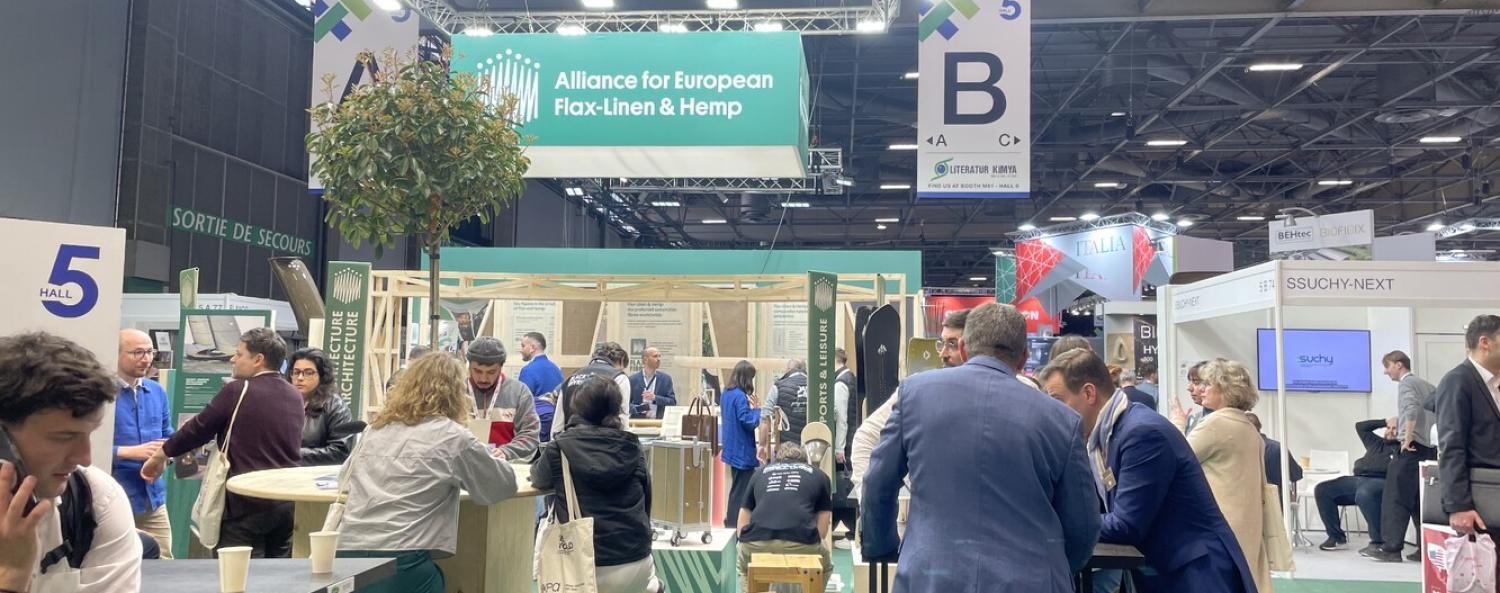
The exhibition featured dedicated areas for bio-based materials and composite recycling. Solutions based on materials such as flax, hemp, and wood fiber were presented there. However, these areas were largely dominated by startups and smaller companies. At the same time, these sections were relatively small compared to the overall exhibition, which in itself says something about how far development has actually progressed.
One challenge is that biomaterials still struggle to compete with traditional solutions in terms of performance and cost. This means the industry still lacks truly scalable alternatives. This also highlights the importance of initiatives such as GFRP Sweden, which works on developing solutions for recycling glass fiber composites—especially considering the large volumes of material from, for example, wind power that will need to be managed in the future.
2. New technological paths – but AI not yet fully visible
When it comes to technological development, a recurring theme was 3D printing of tools, an area many actors highlighted as a way to streamline development processes.
“One area many talked about was 3D printing of tools. It’s a much faster and cheaper way to produce tools compared to machining them in metal,” says David Engberg.
Peter Larsson from Composite Service Europe, who also attended the exhibition, noted the same trend.
“We are seeing more and more additive manufacturing for tooling. It can reduce both lead times and costs in the development phase.”
At the same time, AI is increasingly being discussed as support in development, design, and decision-making processes within the industry. However, despite being a frequent topic in discussions, there were surprisingly few concrete solutions visible on the exhibition floor.
“I actually expected to see more AI solutions on site. It’s something widely discussed in the industry right now, but there was no clear presence at the exhibition,” says David Engberg.
3. Defense and drones – but without clear labeling
Investments in the defense industry are currently influencing many parts of the sector, and fiber composites play an important role in many new systems. Still, this was relatively understated on the exhibition floor.
“The most surprising thing was actually drones aimed at the defense industry, even though they are rarely presented directly as military systems,” says David Engberg.
It is possible that companies often choose not to openly highlight the defense connection, even though the technology is frequently used in such contexts.
4. The same products – again and again
Another clear pattern at the exhibition was the types of products used to showcase materials. Tube structures, automotive components, sports equipment, and aerospace applications dominated.
“It would almost have been fun to count the number of bicycles, surfboards, and pickleball paddles at the exhibition,” says Sammy Pergament.
At the same time, there was surprisingly little representation from the construction sector, despite composites being increasingly used in infrastructure and building. This is particularly interesting from a regional perspective, as several actors within SWE-CIC are working toward that market.
5. Opportunities for northern Sweden
Even though many solutions are not yet mature, there are clear signals about the direction of development.
“New types of resins are starting to emerge from a sustainability perspective. That could become interesting going forward,” says David Engberg.
For actors in northern Sweden, opportunities largely revolve around continuing to build expertise in production, materials, and testing, while the industry gradually transitions toward more sustainable solutions. During the exhibition, several suppliers were also identified as potentially relevant for the testbed in Piteå, including actors in fiberglass tanks, non-destructive testing (NDT), and autoclave technology.
6. Nordic collaboration could strengthen the region
During the visit, discussions were also held with JEC and other composite organizations in the Nordic region about a possible joint initiative for next year’s exhibition. One option being discussed is a Nordic pavilion, or other forms of coordinated activities to strengthen the visibility of the composites industry in the region. The hope is that such an initiative could help put the Nordic composites industry more clearly on the map—while also creating more business opportunities for companies in the network.
7. An industry in transition
In summary, this year’s JEC World shows that the fiber composites industry is facing an important transition. Sustainability requirements are increasing from the EU, governments, and customers—but the industry still has some way to go before solutions are in place at scale.
“The transition toward more sustainable materials and processes is the key issue right now. Requirements are increasing rapidly, but the industry is still lagging behind,” says David Engberg.
At the same time, developments in materials, processes, and digital tools continue to create new opportunities—making industry monitoring and international meeting places such as JEC World increasingly important for actors across the entire value chain.